— a Nightingale reflection on trauma, tenderness, and the architecture of peace
We’ve seen the images: fractured buildings, clouds of dust, funerals without end. The destruction of Gaza has been widely photographed. But what remains unseen — and perhaps even more enduring — is the devastation inside the human mind.
The real ruins are not only architectural. They are psychological.
Children who have survived this war carry damage that cannot be captured in a photo. They have seen death before they understood life. They have heard silence where there should have been conversation. What has been destroyed within them will shape not only their future — but the moral direction of ours.
What We Count — and What We Don’t
The world counts casualties. It measures rubble cleared by the ton. But it rarely measures trauma.
And that omission is dangerous.
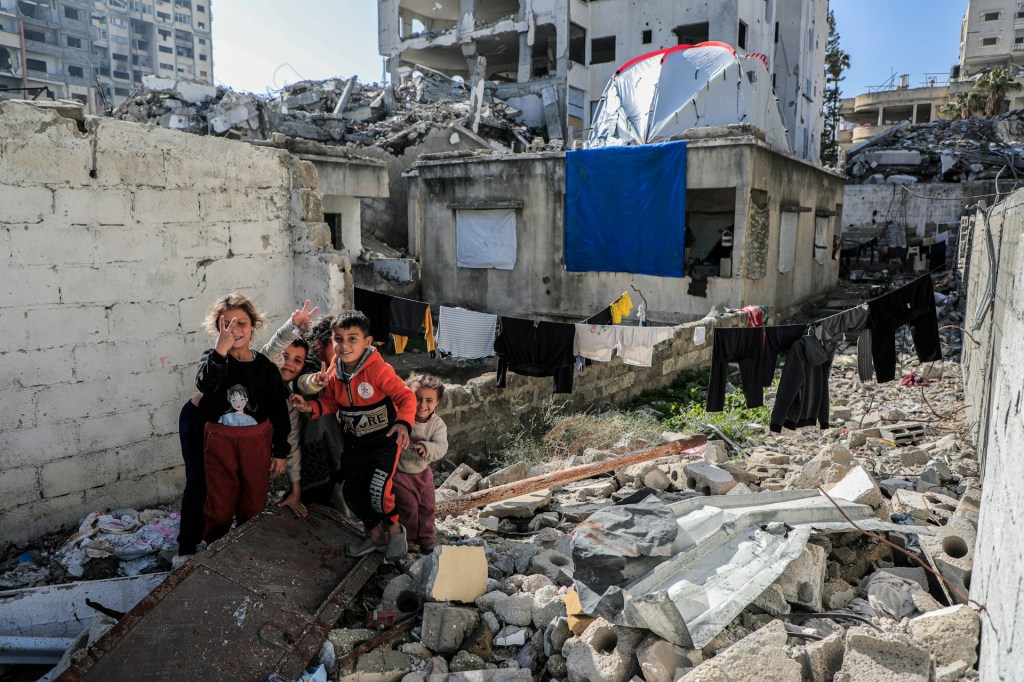
Research shows that more than 80% of children in Gaza have experienced personal or family trauma, with high rates of post-traumatic stress disorder (PTSD), depression, and anxiety (Thabet & Vostanis, 2017; Save the Children, 2022). Neuroscience confirms that chronic trauma alters brain development, impairing memory, learning, and emotional regulation (McCrory, De Brito & Viding, 2010).
When we ignore the internal injuries of children, we risk raising a generation shaped by unresolved fear. The broken minds of today’s children become the wasted potential of tomorrow — minds that might have written, designed, or healed, but instead struggle merely to endure.
Peace is a psychological condition before it is a political one.
Be Like Water: A Philosophy for Healing
Bruce Lee once said, “Be like water, my friend.”
Water adapts. It finds paths through resistance. It carries life through deserts. It softens what seems immovable.
This is what Gaza’s children need most: the return of movement.
Because trauma freezes the inner world. Fear replaces curiosity. Distrust replaces exploration. Everything becomes static.
Healing, then, is the restoration of movement — of emotional flexibility, of imagination, of play.
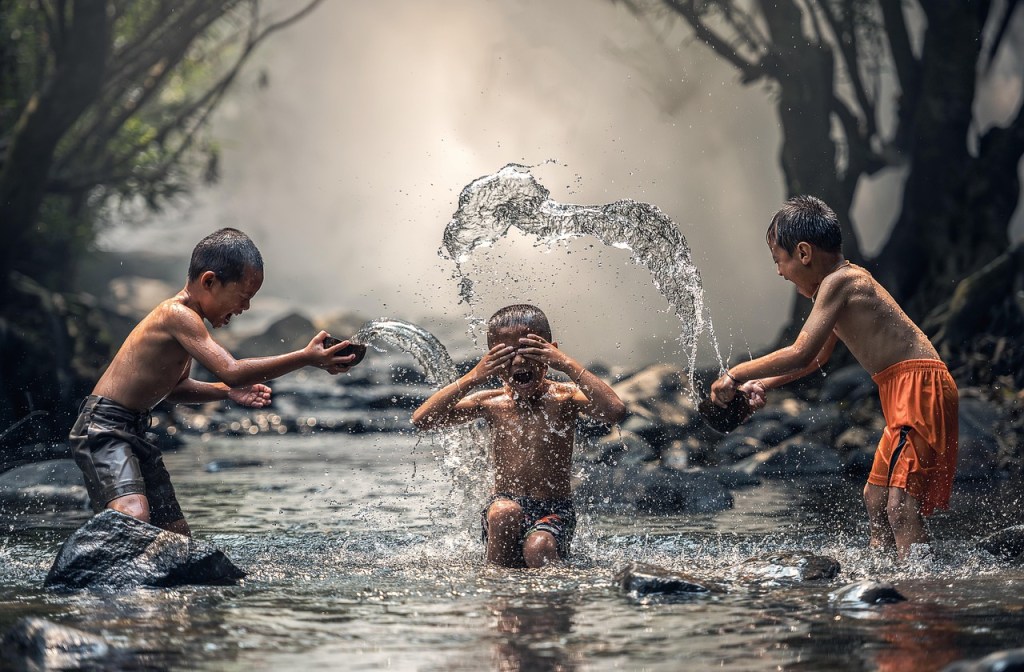
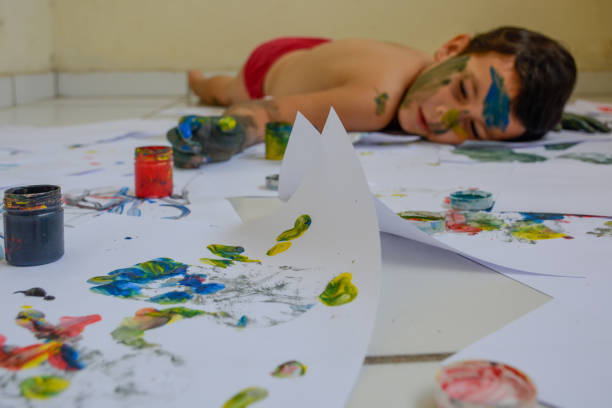
Clinical studies show that play therapy, art therapy, and structured routines help children regain emotional regulation and resilience in post-conflict settings (Betancourt et al., 2013; UNICEF, 2021). Bruce Lee’s yin and yang — the dance between strength and softness — becomes not just philosophy, but clinical necessity.
Therapy Is Infrastructure
But philosophy alone cannot rebuild shattered minds.
The repair must be professional, systematic, and sustained.
Psychological injury does not fade with time. It embeds itself into memory, behavior, and perception. Neuroscience shows that chronic trauma rewires the brain — affecting learning, empathy, and impulse control.
These children need more than ad-hoc relief visits.
They need long-term trauma-informed programs.
They need trained therapists.
They need consistent schools.
They need structured routines.
They need spaces where imagination can safely return.
Every therapy session, every art class, every trauma-aware teacher — is an act of reconstruction as vital as rebuilding a hospital.
Friendship as Intervention
Carole King once sang, “You just call out my name, and you know wherever I am, I’ll come running.”
That lyric captures what many Gaza children have lost: the assumption that someone will come when they cry.
Restoring that trust is a psychological milestone.
Friendship, mentorship, and caregiving are not sentimental gestures.
They are interventions.
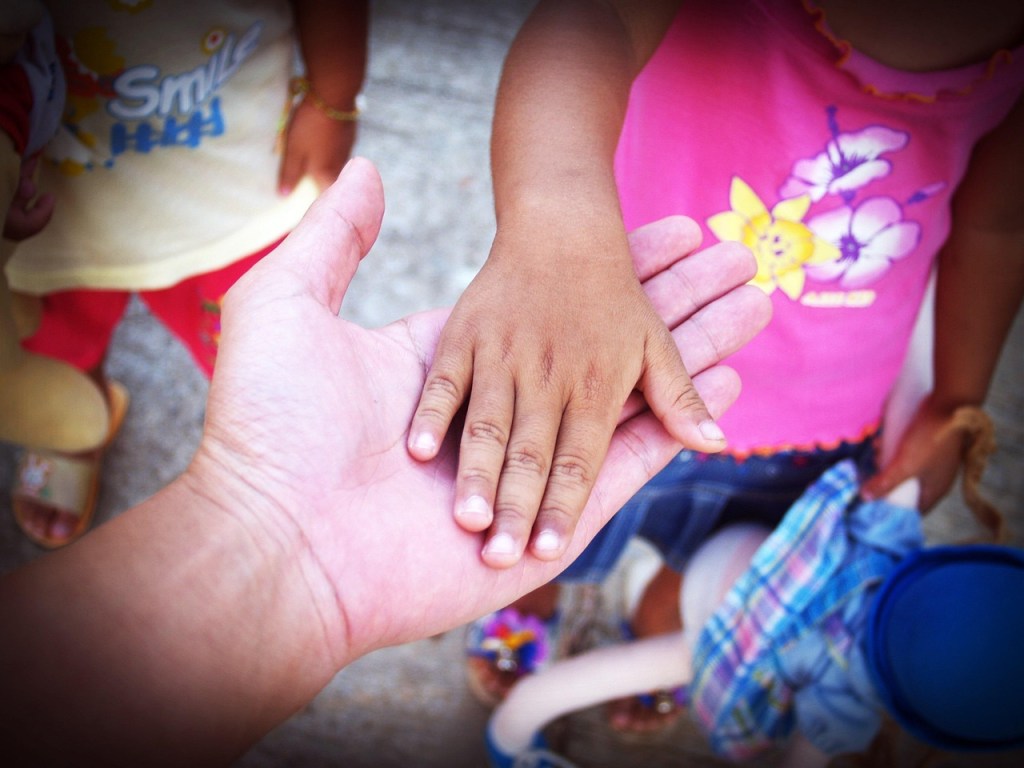
Studies on social support show it is one of the strongest protective factors against PTSD in children (Pynoos et al., 2014). A child who learns again that help exists can begin to rebuild the architecture of trust within the brain.
But friendship cannot rely on goodwill alone.
It requires structure — an organized framework of psychosocial support.
Emotional Safety Is Infrastructure
Schools must function as stabilizing ecosystems:
- Teachers as emotional first responders
- Classrooms as predictable environments
- Art and play as therapeutic tools
Humanitarian agencies must embed mental-health professionals into every stage of reconstruction — not as an afterthought, but as a central pillar.
uNCHR refugees numbers urban refugee crisis collage famous photography
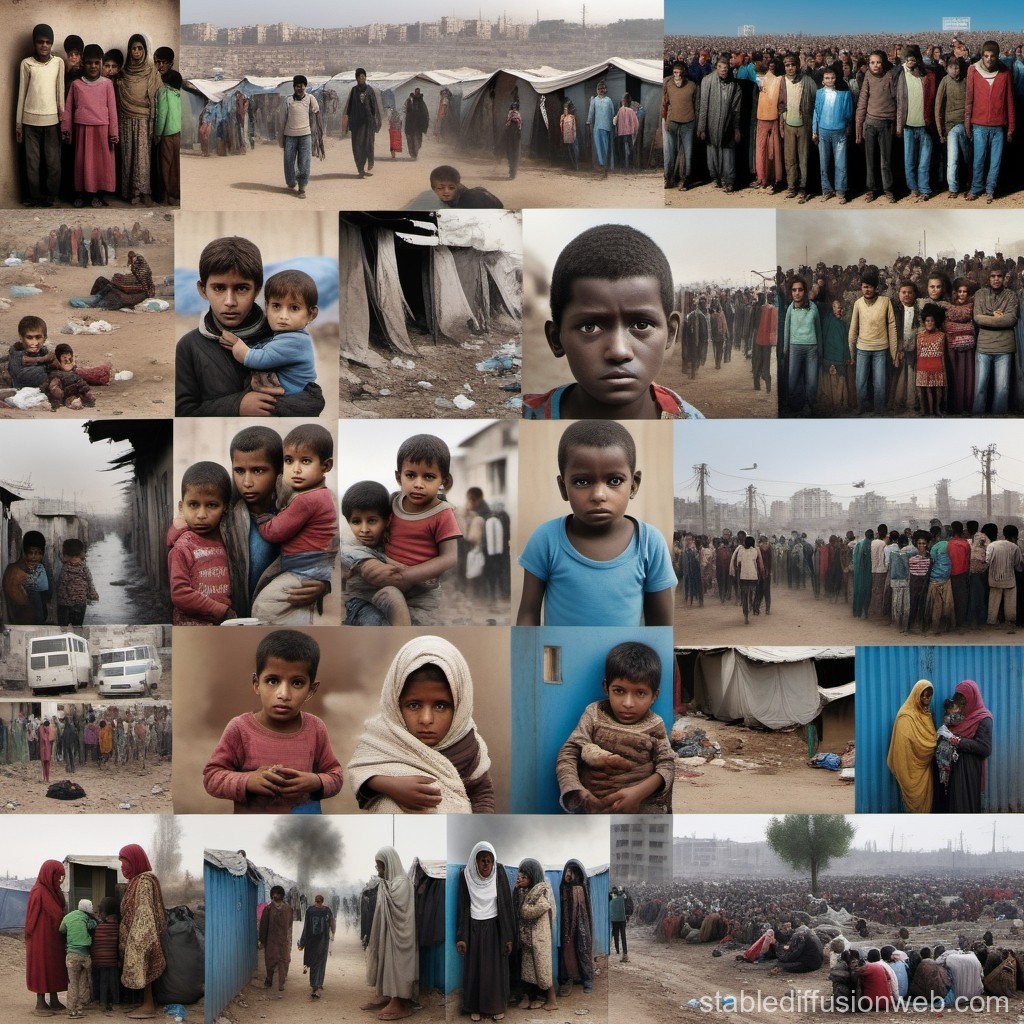
Evidence from UNICEF and the Inter-Agency Standing Committee (IASC) guidelines shows that embedding psychosocial support into schools significantly improves recovery outcomes in conflict zones (IASC, 2007; UNICEF, 2021).
Every new housing project, clinic, or school must include a mental-health component.
Because emotional safety is infrastructure.
“There’s a Place for Us”
Barbra Streisand’s “Somewhere” holds a lyric that echoes through every displaced child’s heart:
“There’s a place for us.”
This is not just romantic. It’s a human right — the right to psychological space.
For Gaza’s children, “somewhere” is both literal and internal.
It means a home that will not be bombed.
It means a mind that is no longer under siege.
Without rebuilding that inner place, every external reconstruction risks becoming temporary. Because a society of traumatized individuals cannot sustain peace.
Brick by Invisible Brick
Mental reconstruction is invisible — and therefore politically unglamorous.
Funding flows more easily toward cement than toward counseling.
But the mind is the foundation upon which all other rebuilding depends.
A city can be rebuilt in a decade.
A psyche may take generations.
To invest in trauma recovery is to prevent future violence. Research confirms that untreated trauma perpetuates cycles of violence, while trauma-informed interventions reduce aggression and improve community cohesion (Kalayjian & Eugene, 2010).
A child who has never known calm will carry volatility into adulthood. In this sense, therapy is a form of disarmament.
A Multi-Level Response
Professional intervention must operate at multiple levels:
- Individual: trauma therapy — cognitive, behavioral, and art-based — through schools and clinics (Evidence : Betancourt et al.,2013)
- Community: training for parents and teachers to recognize distress and avoid re-traumatization (Evidence : Pynoos et al. 2014)
- Institutional: partnerships between universities, NGOs, and ministries to build local trauma-care curricula (Evidence : WHO. 2019)
This transforms mental health from emergency relief into a permanent national resource.
But even that is not enough.
Healing Must Speak the Language of the Soul
Healing must also be culturally resonant.
It must speak the language of the community.
It must respect faith.
It must integrate storytelling and spirituality as tools of resilience.
The combination of modern psychology and cultural wisdom can restore not only a child’s stability — but their sense of identity.
Studies on culturally adapted interventions show higher effectiveness when local traditions, spirituality, and narratives are integrated into therapy (Miller & Rasco, 2004).
Healing is not about forgetting. It is about transforming memory into meaning.
The Real Work of Reconstruction
Bruce Lee urged us to “hack away the unessential.”
What is unessential now is the illusion that physical reconstruction equals recovery.
What is essential is the restoration of trust, emotion, and thought — the invisible human systems that make societies function.
The children of Gaza need more than survival. They need coherence. Without mental coherence, even peace agreements remain brittle.
A Cultural Investment in Peace
Carole King reminds us: friendship is a form of responsibility.
Barbra Streisand reminds us: hope is spatial — every person deserves a place to exist without fear.
Bruce Lee reminds us: true strength is flexible, not rigid.
Together, they offer a framework for psychological reconstruction:
flexibility, presence, and belonging.
The global community must now act with the same urgency for the mind as it does for material aid.
This is not charity.
This is prevention.
Trauma is contagious — it crosses borders through anger and despair.
But healing is contagious too — it spreads through empathy, learning, and creativity.
To Rebuild a Mind Is to Rebuild the World
The rebuilding of Gaza’s children’s minds is not only a humanitarian task.
It is a cultural investment — in the future capacity of humanity to coexist.
To neglect this work is to abandon the very idea of peace.
But to engage in it — professionally, persistently, and poetically —
is to rediscover what civilization means.
Somewhere, as Streisand sings, there must be a place for them.
That place will not appear by chance.
It must be built — through therapy, education, and friendship,
brick by invisible brick.
When we finally understand that reconstructing a mind is as vital as reconstructing a city,
we may yet prove worthy of the world we claim to want.
key research evidence and sources referenced in your page content on healing trauma and rebuilding minds in Gaza.
- Thabet & Vostanis (2017) Gaza child trauma study
- Save the Children (2022) Gaza mental health report
- McCrory, De Brito & Viding (2010) Neuroscience of trauma
- UNICEF (2021) Psychosocial support in emergencies
- Felitti et al. (1998) Adverse Childhood Experiences (ACE) Study
- IASC (2007) Guidelines on mental health and psychosocial support in emergencies
- Kalayjian & Eugene (2010) Trauma interventions and violence reduction
- Miller & Rasco (2004) Culturally adapted trauma interventions
 NightingaleSea
Leave a comment