In the vast, humming circuitry of our digital world, sorrow has been captured, catalogued, and sold.
A single word—refugees—summons two million faces.
Another—Gaza—unlocks hundreds of thousands more.
Each image is a still-life of agony: a child clutching a broken toy, a mother staring at rubble where her home once stood, a father’s eyes hollowed by loss.
They are not just photographs. They are entries in the ledger of war, receipts of our collective failures, written in pixels and tears.

The picture taken by Reuters news agency’s Mohammed Salem shows Inas Abu Maamar cradling the body of her niece Saly. (Reuters pic)
Witnessing in the Age of Images
There is power in this archive.
A student activist in a small town can now access the same testimony once reserved for the world’s largest newsrooms.
A grassroots NGO can amplify the cries of the displaced, ensuring their stories are not swallowed by silence.
This democratization of witness multiplies awareness, keeps memory alive, and insists that the world cannot look away.
But beneath this gift lies a haunting truth: every image carries a cost.
- The cost to the photojournalist who risks life to capture it.
- The cost to the subject, whose most vulnerable moment becomes a commodity.
- And the greatest cost of all—the wars themselves, financed with staggering sums that could have built futures instead of burying them.
Each photograph is another line in the ledger of war—a balance sheet that never reconciles.
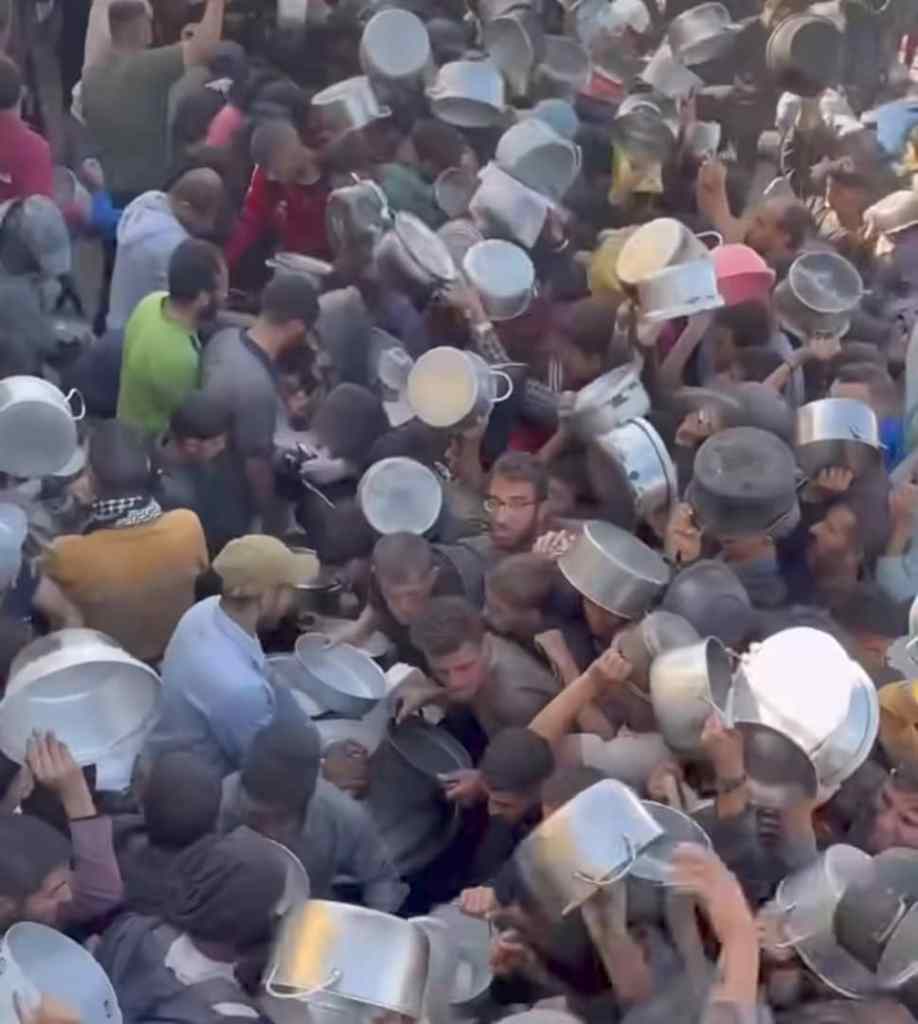
“I posted [on Instagram] about it…and all I got was their likes and shares….nobody reached out to help me or to protect me.”
Photojournalist Motaz Azaiza
The Cold Arithmetic
When confronted with hundreds of thousands of images of shattered homes and terrified children, we are forced to ask not only moral questions, but economic ones.
- Is it cheaper to educate a child for life than to fire a single guided missile?
- Is it cheaper to feed the hungry and train a workforce than to rebuild cities reduced to dust?
- Is it cheaper to irrigate fields and grow exports than to deploy fleets and bombers to erase entire communities?
The numbers are unambiguous.
The cost of one advanced fighter jet could fund thousands of scholarships.
The budget of a naval fleet could irrigate farmland across a region.
War is not only cruel—it is ruinously expensive.
Peace, by contrast, is the orchard that keeps bearing fruit, season after season.
Peace as Pragmatism
This is not a plea from the clouds of idealism. It is a pragmatic truth, written in fiscal reports as clearly as in photographs of grief.
War liquidates—burning through human and financial capital with terrifying efficiency.
Peace compounds—yielding returns in health, innovation, trade, and stability.
Imagine if leaders treated education, agriculture, and healthcare not as “costs” but as strategic assets.
Imagine if budgets were measured not in weapons procured, but in futures secured.
Imagine if the ledger of war was finally closed, and the orchards of peace were allowed to grow untended.
A Date from Palestine
Each time I bite into a sweet, rich date from Palestine, the argument becomes personal.
I think of the farmer who planted the tree, who tended it under occupation, who harvested its fruit with hands calloused by both labor and uncertainty.
That date is not just food—it is a question.
How can we, as a global community, make his life better?
Not with aid packages born of crisis, but with genuine investment in peace and prosperity.
That farmer’s orchard is the counterpoint to the ledger of war. It is proof that life, when nurtured, multiplies its gifts
The More Sensible Choice
The solution is not hidden. It is in the laughter of children in classrooms.
It is in the dignity of a worker with a steady job.
It is in the quiet pride of a farmer reaping a healthy harvest.
Peace has always been the more sensible, the more humane, and the more profitable choice.
The images of agony remind us of the cost of forgetting this truth.
The orchards remind us of what we stand to gain.
The challenge before us is to remember—and to act—before the ledger of war writes us out of history, and the orchards of peace are left untended.
Further Reading and Recommended Reports
| Title | Link | What You Get from the Reading |
|---|---|---|
| Economics of Peace – Institute for Economics & Peace | Link / 2025 | Offers global data on the cost of violence and the economic benefits of peacebuilding, including per capita losses and strategic investment returns. |
| Mapping the Economic Costs of War – CEPR | Link /2024 | Provides empirical analysis of war’s impact on GDP, inflation, and long-term economic disruption. Useful for quantifying the macroeconomic toll of conflict. |
| Photographing Gaza: A Case Study – Prospect Journal | Link /2024 | Explores the political and ethical dimensions of photojournalism in Gaza, focusing on award-winning photographers and the risks they face. |
| Gaza Photographer Samar Abu Elouf – CNN Interactive | Link / 2024 | A personal and professional profile of Samar Abu Elouf, highlighting the emotional labor and ethical dilemmas of documenting war. |
| Motaz Azaiza Profile – UNISPAL | Link / 2024 | Details the experience of Motaz Azaiza, a photojournalist who fled Gaza, emphasizing mental health and global engagement metrics. |
| The Besieged Palestinian Agricultural Sector – UNCTAD | Link /2025 | Analyzes structural barriers to agricultural productivity in Palestine, including land access, import restrictions, and infrastructure damage. |
| Agrarian Questions in Global Palestine – Taylor & Francis | Link /2025 | Academic exploration of Palestinian agrarian challenges, historical context, and future policy directions. |
| The Economics of War and Peace – Theoretical Economics Letters | Link /2025 | Theoretical framework for understanding economic incentives behind war and peace, useful for SROI comparisons and budget modeling. |
 NightingaleSea
Leave a comment