Kindness in the war time
In lands where sirens sing of grief,
And hope is rationed, thin and brief,
A stranger’s hand, a shared meal’s grace—
Compassion blooms in scorched-out place.
Not loud, not grand, not dressed in gold,
But fierce, and warm, and quietly bold.
It stitches peace where bombs have torn—
A stubborn light, rebellion born.
“In a world addicted to conflict, kindness is the quiet protest we forgot to headline. While headlines scream of war and division, a quieter truth flickers beneath the chaos: compassion isn’t just surviving—it’s staging a rebellion.”
From Ukraine to Gaza, Sudan to Myanmar, the world’s fault lines are ablaze. These aren’t just geopolitical flashpoints—they’re human heartbreaks unfolding in real time. And while the crises test our collective resolve, the global response reveals something quietly astonishing: compassion is not a casualty. It’s the counterforce.
This isn’t a story of despair—it’s a story of defiance. Of people, governments, and organizations choosing solidarity over silence. Of aid workers who run toward danger. Of neighbours who turn their homes into shelters. Of philanthropists who move billions with a single act of trust. It’s a story that insists: even in the darkest hour, humanity doesn’t flinch—it rallies.

Cities Crumble, But So Do Borders
The images are brutal—shattered homes, families on foot, futures paused mid-sentence. But every broken window is met with a door flung open. When Ukraine faced invasion, the world didn’t just send weapons—it sent blankets, bandages, and bureaucrats who, for once, got something right.
The United States, European Union, Germany, and the United Kingdom mobilized immense humanitarian aid: food, shelter, medical care. But the real poetry? Poland and the Czech Republic didn’t just open borders—they opened their living rooms. Millions of refugees were met not with suspicion, but with soup. Empathy, it turns out, is borderless.
yesThis wasn’t a PR stunt. It was a profound demonstration of dignity over division. A reminder that when politics fail, people don’t have to.
The Frontlines Are Staffed by Hope
While governments convene in air-conditioned rooms and donors fine-tune their spreadsheets, the real work happens in places where the Wi-Fi is patchy and the stakes are mortal. Humanitarian organizations—UN agencies, the Red Cross, Doctors Without Borders—don’t wait for perfect conditions. They show up in the rubble, in the camps, in the chaos.
In Gaza’s ruins and Sudan’s remote outposts, they deliver more than aid—they deliver dignity. They treat wounds that politics won’t acknowledge. They cradle lives that headlines forget. Their presence is not just logistical—it’s philosophical. It says: even here, life matters. Even now, we care.
And let’s be clear: this isn’t hero worship. It’s a recognition of what it means to show up when showing up means risking everything. These medics, logisticians, and field workers are not symbols—they’re signals. Proof that compassion isn’t passive. It’s tactical. It’s brave. It’s relentless.
Local Heroes Don’t Wait for Permission
Before the aid trucks roll in, and long after they roll out, it’s the local leaders who keep the lights on—figuratively and sometimes literally. In Sudan, community networks have become the first and often only lifeline for families navigating war, displacement, and scarcity. In Myanmar, civil society groups operate like underground rivers: unseen, essential, and quietly revolutionary.
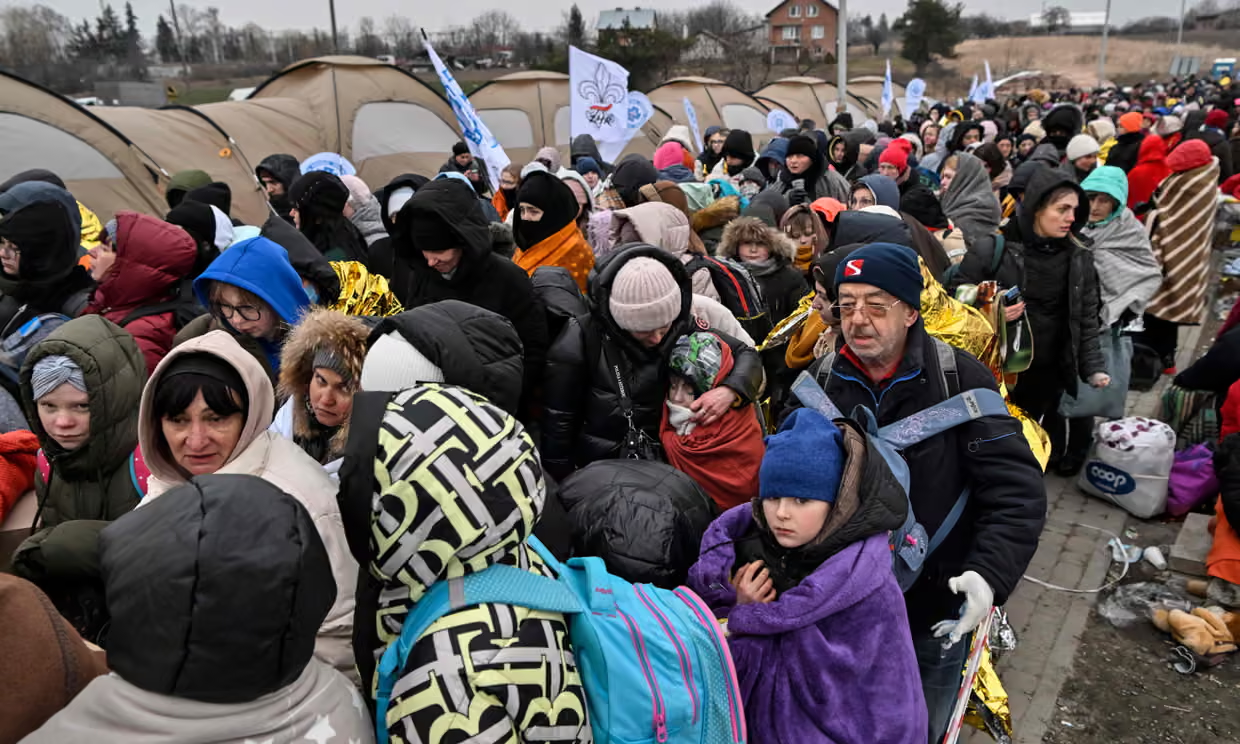
People wait for transportation after fleeing from Ukraine and arriving at the border crossing in Medyka, Poland, on Monday. Photograph: Louisa Gouliamaki/AFP/Getty Images
These aren’t headline-makers. They’re hope-makers. With intimate knowledge and unwavering commitment, they navigate chaos with grace. No press conferences. No photo ops. Just relentless care.
They prove something radical: when systems collapse, human connection doesn’t. These grassroots responders aren’t waiting for permission—they’re rewriting the rules of resilience. And in doing so, they remind us that the most powerful infrastructure is empathy, locally sourced and globally felt.
Billionaires Behaving Decently (For Once)
In a world where billionaires can launch themselves into space for fun, it’s refreshing—borderline miraculous—when private wealth decides to orbit humanity instead. Philanthropic giants like the Gates Foundation and IKEA Foundation are channeling billions into health, nutrition, and refugee programs. Not for headlines. For impact.
Tech titans like Google and Microsoft lend more than algorithms—they lend infrastructure, logistics, and reach. UPS doesn’t just deliver packages; it delivers possibility. And then there’s MacKenzie Scott, rewriting the philanthropy playbook with unrestricted grants and radical trust in frontline organizations.
This isn’t charity. It’s conscience with capital. A signal that the world’s moral compass isn’t broken—it’s just being recalibrated by those willing to turn wealth into wellness. When private generosity aligns with public need, the result isn’t just aid—it’s acceleration.
Peace Is Not Naive—It’s Necessary
In today’s polarized world, advocating for peace is treated like showing up to a knife fight with a poem. Diplomacy is dismissed as weakness. Ceasefires are called unrealistic. And those who dare to imagine a world without war? They’re labeled naive, idealistic, or dangerously out of touch.
But let’s pause. What’s more naive—believing in dialogue, or believing that endless violence leads to resolution?
The voices calling for peace are not soft—they’re steel wrapped in velvet. They are the guardians of our collective imagination, the ones who refuse to let cynicism become policy. Their work is not passive—it’s radical. It keeps the flame of possibility alive in a world addicted to conflict.
If these voices are silenced, hope is silenced too. And without hope, all we have left is noise.
The Web We Weave
Governments, NGOs, grassroots groups, billionaires, peace advocates—they’re not just players in a humanitarian drama. They’re strands in a vast, tangled web of compassion. It’s messy. It’s imperfect. And it’s miraculous.
This web doesn’t just offer relief—it offers a narrative worth believing in. It says that solidarity is possible. That empathy is scalable. That kindness, when coordinated, becomes infrastructure.
And yes, the road ahead is long. The headlines will keep screaming. The crises will keep coming. But so will the helpers. So will the healers. So will the quiet rebels who choose compassion over convenience.
Because in the face of darkness, the light of human kindness doesn’t just flicker—it flares. And if we’re lucky, it’ll burn long enough to guide us home.
What if Kindness was our foreign policy?
 NightingaleSea
Leave a comment