What does power projection look like in a multipolar world? China’s September 2025 military parade offered one answer—visually choreographed, technologically assertive, and diplomatically curated. This post explores how that answer continues to shape strategic thinking across capitals.
Strategic Reflections & Global Observations
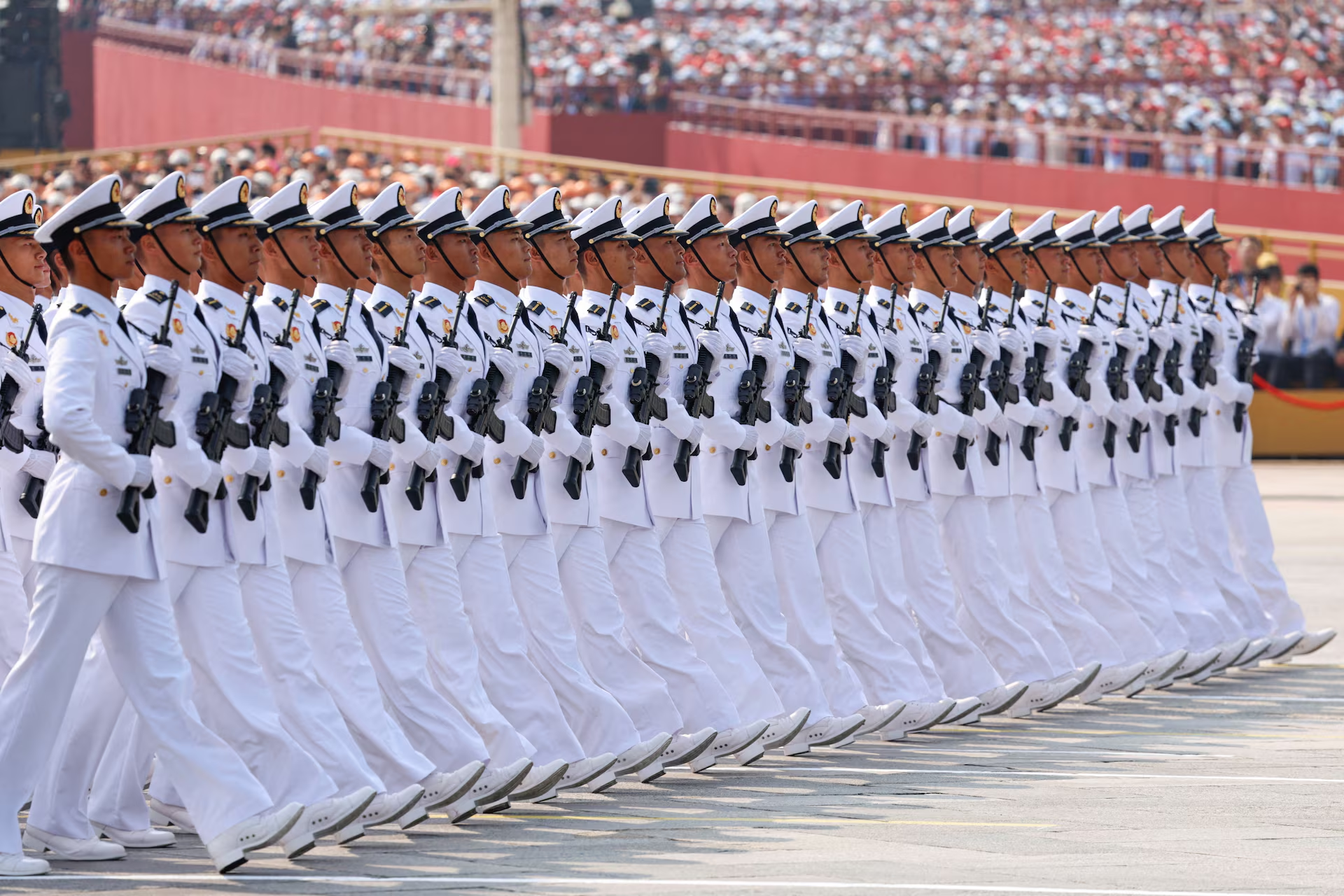
On September 3, 2025, Beijing’s military parade commemorating the 80th anniversary of World War II’s end was more than a ceremonial tribute—it was a meticulously choreographed geopolitical broadcast. While the event was framed as a historical milestone, its true function lay in signaling China’s arrival as a top-tier military and technological power. For analysts and scholars, the parade offers a layered archive of strategic intent, technological assertion, and diplomatic recalibration.
Strategic Capability: From Symbolism to Deterrence
The most direct message came through the hardware. China’s emphasis was not on numerical strength, but on technological sophistication.

A JL-3 submarine-launched intercontinental ballistic missile and DF-61 ICBMs are displayed during a military parade in Beijing on Sept. 3. (VGC via Getty Images)
- The DF-61 Intercontinental Ballistic Missile (ICBM), road-mobile and capable of reaching the continental United States, marked a significant leap in strategic reach and survivability. Its mobility complicates detection, reinforcing China’s deterrence posture.
- The JL-3 submarine-launched missile and JL-1 air-launched missile completed the visual presentation of China’s nuclear triad. This was the first public display of all three legs—land, sea, and air—signaling a credible second-strike capability.
Together, these systems reposition China within the global nuclear hierarchy, challenging long-standing assumptions about strategic parity and deterrence.
Future Warfare: Hypersonics and Networked Combat
The parade also served as a showcase for China’s investment in next-generation warfare.
- Hypersonic missiles like the YJ-21, traveling at speeds exceeding Mach 5 with unpredictable trajectories, pose a direct challenge to existing missile defense systems and U.S. naval dominance in the Pacific.
- The debut of the twin-seat J-20S stealth fighter, with its second pilot functioning as a battlefield coordinator, points to a new era of networked, multi-domain operations.
These developments suggest a doctrinal evolution toward high-speed, high-autonomy combat environments, where decision loops are compressed and human-machine integration is central.
Autonomous Systems: From Catch-Up to Leadership
China’s emphasis on automation was not subtle—it was strategic.
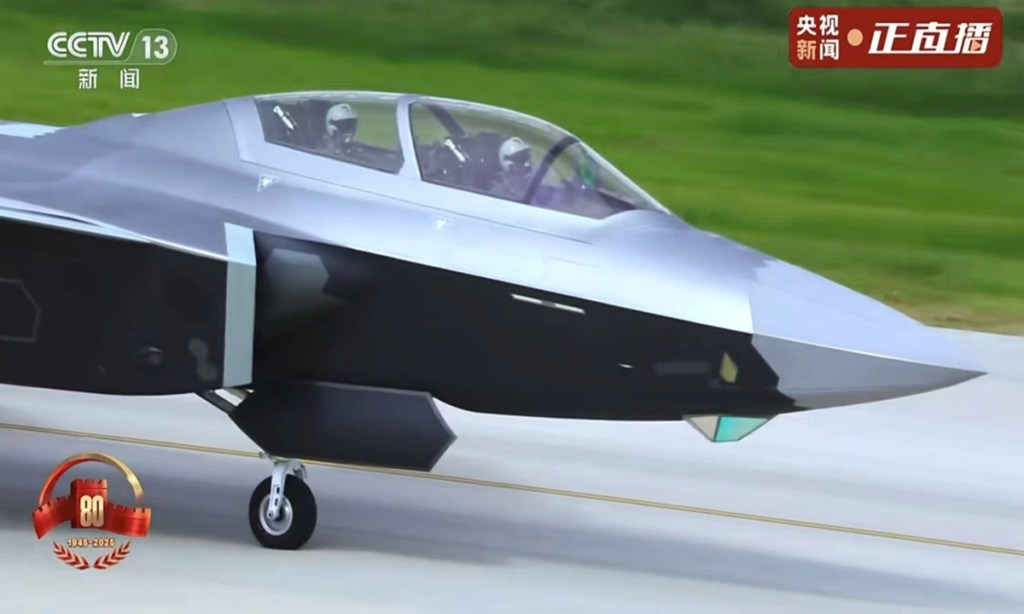
J-20S two-seat fighter jet is reviewed at China’s V-Day military parade on September 3, 2025. Photo: Screenshot from CCTV News
- Extra-Large Unmanned Undersea Vehicles (XLUUVs) like the AJX002 signal long-range surveillance and mine-laying capabilities, expanding China’s maritime reach.
- Four-legged “robotic wolves” represent a new frontier in ground-based autonomous operations, blending mobility, adaptability, and tactical versatility.
This array of unmanned systems positions China not just as a competitor, but as a leader in autonomous warfare innovation. The message: China is no longer catching up—it is setting the pace.
Diplomatic Optics: Seating as Strategy
The guest list was as choreographed as the missile formations.
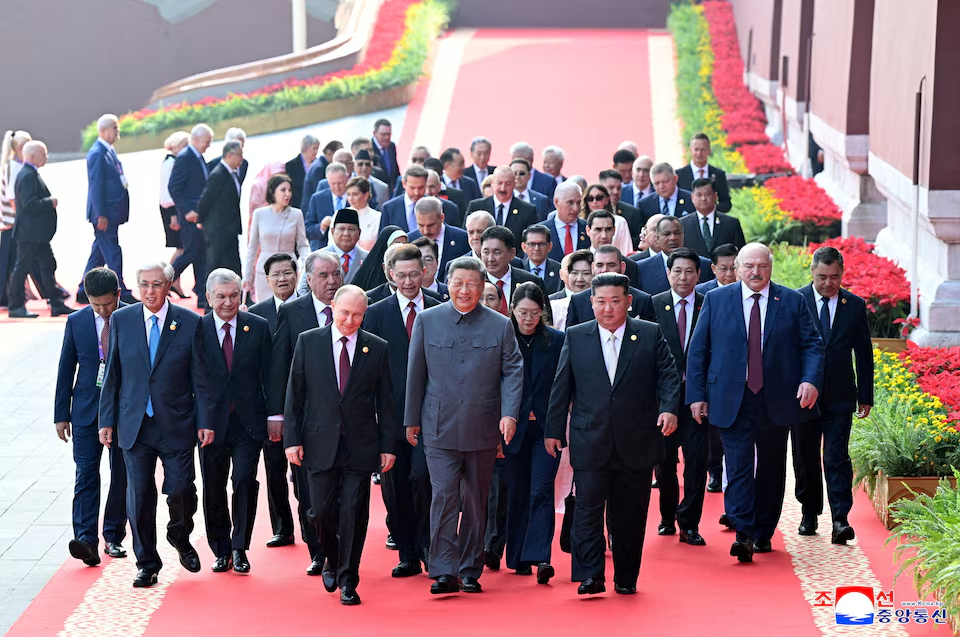
Xi Jinping’s alignment with Vladimir Putin and Kim Jong Un visually reinforced a bloc of resistance to Western hegemony. Their presence signaled a shared narrative of sovereignty, opposition, and alternative order.
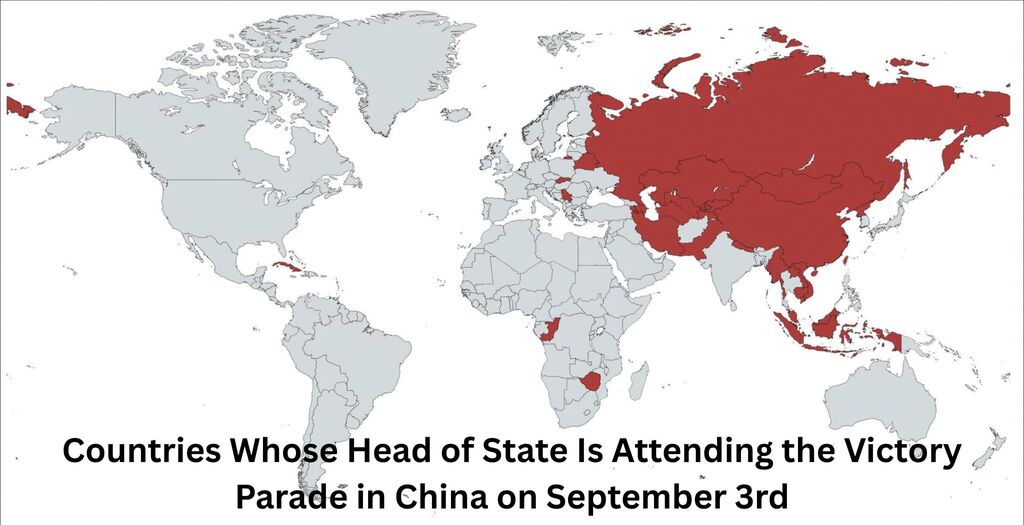
The absence of Western leaders, juxtaposed with dignitaries from Asia, Africa, and Latin America, mapped China’s diplomatic outreach across the Global South.
- This seating chart was a geopolitical map. It illustrated China’s ambition to lead a multipolar world, offering partnerships beyond the traditional Western axis.
🇨🇳 Domestic Messaging: National Pride and Party Legitimacy
For domestic audiences, the parade was a moment of national affirmation.
- The synchronized formations and indigenous weaponry symbolized the end of the “century of humiliation” and the rise of a rejuvenated China.
- The event reinforced the Communist Party’s role as architect of national strength, aligning military prowess with ideological legitimacy.
This internal messaging consolidates public support, fortifies national identity, and embeds the Party’s narrative within the broader arc of historical redemption.
Conclusion: From Parade to Paradigm
The September 2025 parade was not a historical footnote—it was a strategic inflection point. For scholars and analysts, it offers a layered archive of China’s military doctrine, diplomatic signaling, and domestic consolidation. It invites us to read beyond the choreography and into the calculus.
As global power dynamics shift, events like this parade serve as mirrors—not just of intent, but of trajectory. The weapons may have rolled past, but the messages remain in motion.
 NightingaleSea
Leave a comment