Rudyard Kipling, in his timeless “The Jungle Book,” penned lines that resonate far beyond the rustling leaves and shadowed lairs he described:
“Now this is the Law of the Jungle—as old and as true as the sky; And the Wolf that shall keep it may prosper, but the Wolf that shall break it must die.
As the creeper that girdles the tree-trunk the Law runneth forward and back— For the strength of the Pack is the Wolf, and the strength of the Wolf is the Pack.”
These aren’t just quaint verses for a children’s story; they are a profound meditation on interdependence, mutual respect, and the sheer, unadulterated power of community.
It’s a message that echoes with startling clarity in the halls of diplomacy and the complex chessboard of geopolitics, particularly when we turn our gaze to the Association of Southeast Asian Nations (ASEAN) and its enduring quest for cohesion.
Especially now, with global fault lines trembling, the wisdom of Kipling’s “Law of the Jungle” for ASEAN becomes not just relevant, but a vital call for prudence. The unnerving standoffs between India and Pakistan, neighbours armed with nuclear capabilities who can drag the world to the precipice with terrifying speed, offer a stark, continuous lesson in why this prudence is paramount.
The ASEAN Tapestry: Weaving Strength from Diversity
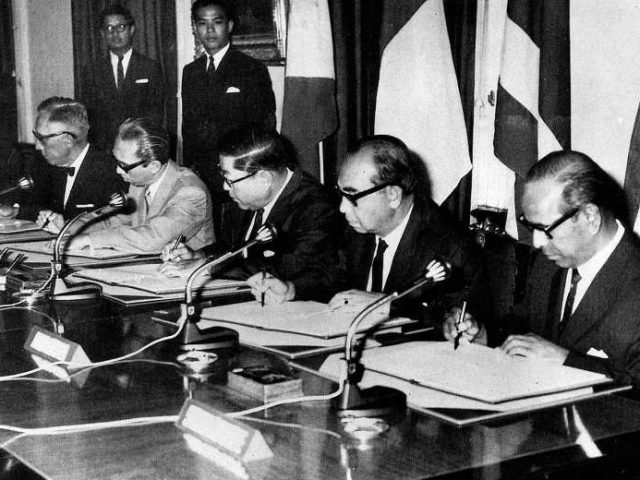
Picture Southeast Asia in the mid-1960s. The Cold War raged, the “domino theory” was a palpable fear, and newly independent nations were finding their footing in a turbulent world. It was against this backdrop, on August 8, 1967, that five foreign ministers – Adam Malik of Indonesia, Narciso Ramos of the Philippines, Tun Abdul Razak of Malaysia, S. Rajaratnam of Singapore, and Thanat Khoman of Thailand – signed the Bangkok Declaration.
This wasn’t just a document; it was a defiant act of hope, birthing ASEAN. Today, the bloc has doubled in size, embracing Brunei, Cambodia, Indonesia, Laos, Malaysia, Myanmar, the Philippines, Singapore, Thailand, and Vietnam.
What a motley crew! From the bustling, high-tech metropolis of Singapore to the serene, agrarian landscapes of Laos; from the vast archipelago of Indonesia, home to hundreds of ethnic groups, to the smaller, oil-rich sultanate of Brunei; from staunchly communist Vietnam to the constitutional monarchy of Thailand. Their cultures, economic engines, and political ideologies are a study in contrasts. Yet, like Kipling’s wolf pack, these disparate nations coalesced around a shared understanding: their individual survival and prosperity were inextricably linked to the strength of the collective.
ASEAN’s foundational principles – the famous “ASEAN Way” of consensus-based decision-making, non-interference in internal affairs, and an unwavering commitment to resolving conflicts peacefully – are the very sinews of this Jungle Law. It’s a commitment best illustrated not just by grand treaties, but by quiet, persistent diplomacy.
Think of the decades-long, sometimes tense, maritime boundary negotiations between Malaysia and Indonesia, or the border disagreements that occasionally flare between Thailand and Cambodia, such as the Preah Vihear Temple dispute. While not always swift, the commitment to dialogue, often facilitated by ASEAN mechanisms, has largely kept these from escalating into wider conflict, a testament to the underlying pact.
The Shadow of Division: Lessons in Rapid Escalation from the Subcontinent
To truly grasp the value of ASEAN’s hard-won unity, and the critical need for prudence, we need only look north, to the enduring, tragic animosity between India and Pakistan. Born from the bloody crucible of the 1947 Partition of British India – a separation that left a scar of perhaps a million dead and over ten million displaced – these two nations have been locked in a cycle of suspicion and conflict ever since. Three major wars (1947-48, 1965, 1971) and the Kargil conflict of 1999, not to mention countless skirmishes and covert operations, have defined their relationship. The unresolved core of this is Kashmir, a breathtakingly beautiful land claimed by both, a wound that refuses to heal.
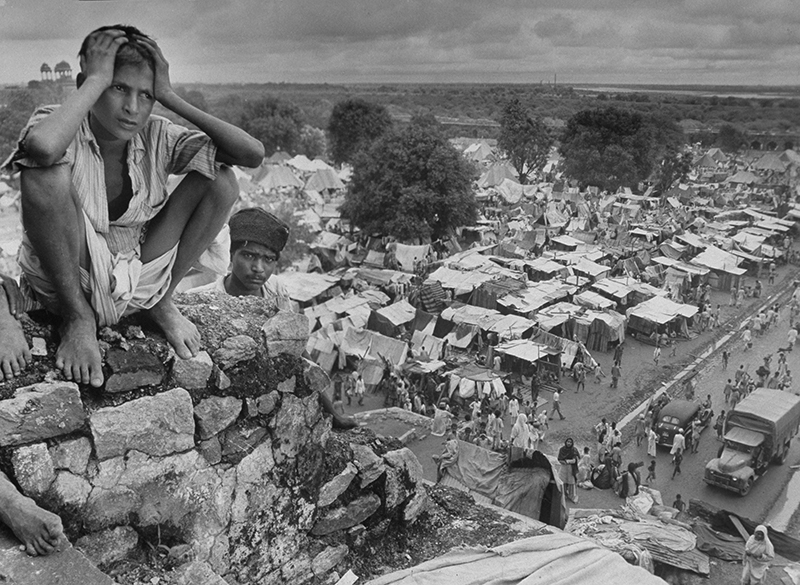
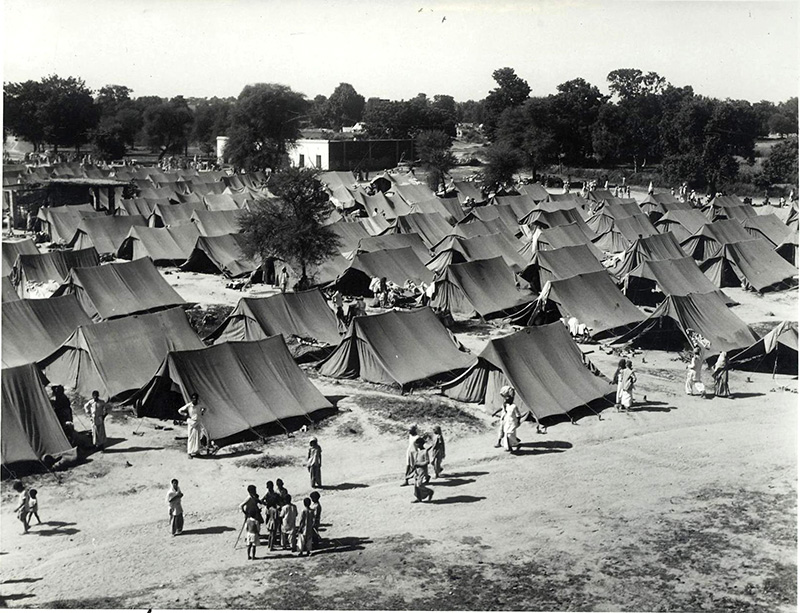
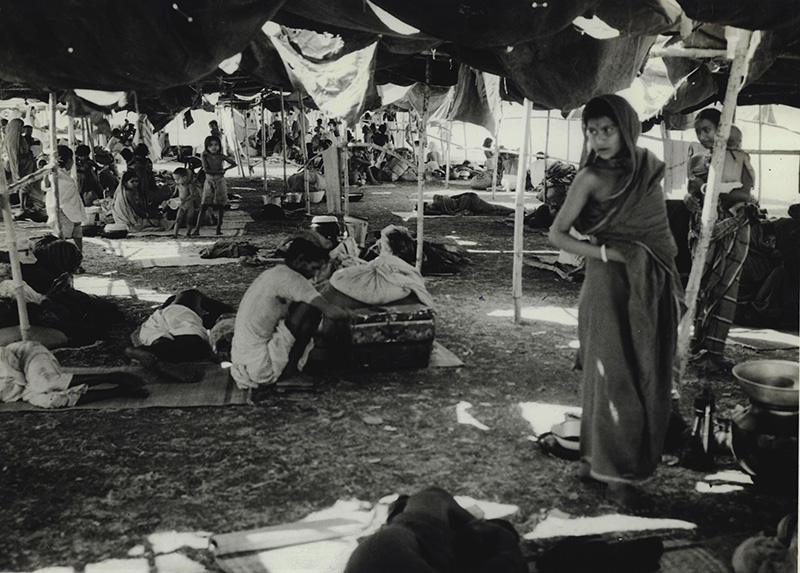
1947 Partition – A collection of images capturing the chaos and human suffering during the Partition
The world watched, heart in mouth, in February 2019. Following a devastating suicide attack in Pulwama, Kashmir, which killed 40 Indian paramilitary personnel, India launched retaliatory airstrikes on Balakot, deep within Pakistani territory – the first such acknowledged crossing of the Line of Control by Indian aircraft since the 1971 war. Pakistan scrambled its own jets, an Indian pilot was captured. For days, the spectre of all-out war, possibly nuclear, loomed.
The rapidity of this escalation, from a terrorist attack to direct state-on-state military action involving nuclear-armed powers, was a chilling spectacle. It took intense international diplomacy and, thankfully, a degree of strategic self-restraint to pull back from that terrifying precipice. Both nations tested nuclear weapons in 1998. India maintains a “No First Use” (NFU) policy, but Pakistan does not, reserving the right to use nuclear weapons in response to conventional aggression it deems existential – a doctrine that significantly lowers the nuclear threshold and amplifies the danger of swift, catastrophic escalation.
In Kipling’s terms, these instances represent a catastrophic breaking of the Law. Each nation, acting in what it perceived as its own interest, risked not just its own survival but regional and global stability. The economic cost alone is staggering – billions diverted to military spending that could transform lives, trade stunted, and regional cooperation initiatives like SAARC (South Asian Association for Regional Cooperation) often paralyzed by their bilateral tensions. It’s a stark illustration of how the failure to recognize interdependence breeds a perpetual state of vulnerability, and how quickly old wounds, coupled with modern arsenals, can lead to the brink.
ASEAN must absorb this lesson with profound seriousness: disputes between nations with advanced military capabilities, especially nuclear ones, can spiral out of control with breath taking and terrifying speed.
ASEAN’s Prudence: A Strategic Imperative in a Complex Region
ASEAN, in stark contrast, strives to be a strategic buffer against such escalations. It is precisely this lesson in rapid escalation from the India-Pakistan theatre that underscores why ASEAN’s cautious, dialogue-centric approach is not a weakness, but a profound strength. It’s not that differences don’t exist within ASEAN – they absolutely do.
Consider the complex and often contentious issue of the South China Sea, where multiple ASEAN members have overlapping claims with each other and, most significantly, with China, itself a nuclear power. While achieving a unified stance against a superpower like China is an immense challenge, ASEAN has, for years, prudently pushed for a legally binding Code of Conduct (COC). The very act of negotiating as a bloc, rather than as individual, smaller nations, provides a degree of leverage and, critically, a framework for de-escalation and dialogue that wouldn’t otherwise exist. The 2002 Declaration on the Conduct of Parties in the South China Sea (DOC), while non-binding, was an early testament to this collective, cautious approach.
This unity translates into tangible economic and diplomatic muscle. ASEAN as a bloc boasts a combined GDP that makes it a major global economic player. Initiatives like the ASEAN Free Trade Area (AFTA) and, more recently, its central role in the Regional Comprehensive Economic Partnership (RCEP) – one of the world’s largest trade blocs – demonstrate how collective action amplifies economic opportunity for all members. Diplomatically, platforms like the ASEAN Regional Forum (ARF) bring together major global powers (including the US, China, Russia, India, and the EU) to discuss regional security issues, with ASEAN often, quite literally, in the driver’s seat, fostering an environment where prudence is encouraged.
This isn’t just about lofty ideals; it’s an operational necessity learned from observing near-catastrophes elsewhere. No single Southeast Asian nation, not even Indonesia with its large population, can command the same attention or wield the same influence as ASEAN united. The “Law of the Jungle” here is an economic and strategic reality: the individual wolf’s prosperity is directly tied to the pack’s ability to hunt, defend its territory, and crucially, avoid existential fights that could decimate it.
Hard-Earned Wisdom: Sustaining ASEAN’s Cohesion and Prudence
The India-Pakistan dynamic, with its ever-present threat of rapid escalation, serves as a perpetual, sobering lesson: division breeds weakness and instability, and a lack of established de-escalation mechanisms in a nuclearized environment is an invitation to disaster. ASEAN’s commitment to harmony, therefore, is its most critical strategic asset.
This requires constant nurturing: fostering trust, ensuring transparent dialogue, building cooperative frameworks, and, most importantly, internalizing the lessons of prudence from regions that have stared into the abyss.
We’ve seen ASEAN tested. The 1997 Asian Financial Crisis hit the region hard. The “Tom Yum Goong” crisis, starting in Thailand, exposed vulnerabilities but also spurred greater financial cooperation, leading to initiatives like the Chiang Mai Initiative. More recently, the COVID-19 pandemic saw ASEAN activate mechanisms like the COVID-19 ASEAN Response Fund. These are examples of the pack sharing resources and managing crises collectively.
However, the current crisis in Myanmar, following the 2021 military coup, presents one of the most severe tests to ASEAN’s unity and its principle of non-interference. The inability to forge a consensus on how to effectively address the situation has exposed fissures. It highlights that upholding the “Law” requires constant effort, adaptation, and perhaps a re-evaluation of how to manage internal crises that have profound regional implications, always with an eye toward preventing escalation.
ASEAN’s Path Forward: Embracing the Ties that Bind with Renewed Caution
The path ahead is fraught with ever more complex challenges. The intensifying US-China rivalry places Southeast Asia squarely in the geopolitical crosshairs. Climate change demands collective solutions. The rapid pace of digital transformation brings its own set of instabilities. In such an environment, the lessons from the India-Pakistan dynamic – particularly the speed at which crises between militarily powerful states can escalate – are paramount. ASEAN must be doubly prudent.
Kipling’s Jungle Law offers an enduring compass. ASEAN nations must continually reinforce their collective identity and commitments. This isn’t about suppressing national interests. The pack thrives because each wolf contributes.
ASEAN’s genius has always been its ability to harmonize diverse national interests, balancing sovereignty with collective responsibility. This must now include an enhanced focus on pre-emptive diplomacy and robust crisis management mechanisms, specifically designed to prevent the kind of rapid escalation seen elsewhere.
Conclusion: The Enduring Truth of Kipling’s Jungle and the Imperative of Prudence
When we reflect on Kipling’s metaphor, illuminated by the stark, hair-raising lessons from the India-Pakistan conflict – a conflict between two nuclear-armed states where escalation can be terrifyingly swift – ASEAN’s pursuit of unity and its adherence to cautious diplomacy appear not just beneficial, but as an existential necessity. The stakes are nothing short of regional peace, stability, and the continued prosperity of over 660 million people in a region increasingly frequented by major, nuclear-capable powers.
Breaking the Law of the Jungle, as Kipling warned, invites peril. For ASEAN, this means meticulously avoiding scenarios that could lead to rapid, uncontrollable escalation.
By internalizing this ancient wisdom, by consistently choosing dialogue over division, by being profoundly prudent in its dealings, and by recognizing that its collective strength and established mechanisms for de-escalation are the ultimate guarantors of each member’s security, ASEAN can navigate the turbulent currents of our world. The strength of the Pack truly is the Wolf, and the strength of the Wolf, unequivocally, is the Pack. For ASEAN, this is not just poetry; it is the pragmatic, prudent blueprint for survival and flourishing in the 21st century.
- #SoutheastAsia
- #RegionalCooperation
- #ASEANUnity
- #InternationalRelations
- #GlobalDiplomacy
 NightingaleSea
Leave a comment