Malaysia’s Stand on Economic Cooperation with China Amid Global Trade Tensions
As Malaysia navigates the complexities of global trade uncertainty, one undeniable reality emerges—its economic trajectory is increasingly intertwined with China’s policies, investments, and regional ambitions. From bilateral projects to trade agreements, China is not just a key economic partner; it is actively influencing Malaysia’s future development. The question remains: Is Malaysia strategically engaging with China, or is it becoming overly dependent on its future?
According to the Malaysian Minister of Investment, Trade and Industry, the visit is expected to reinforce trade and investment ties, particularly as Malaysia responds to global economic disruptions. While the visit was planned long before recent trade tensions escalated, its timing now carries added weight.
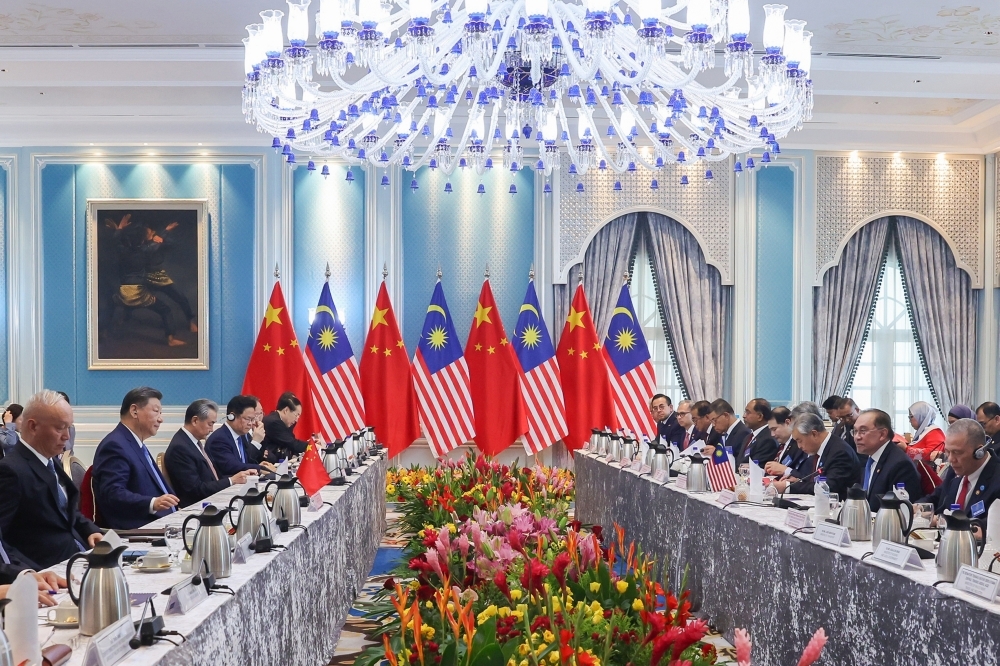
Malaysia’s Role in ASEAN and China’s Expanding Presence
As the current chair of ASEAN, Malaysia is leading discussions on defending multilateral trade principles against a growing wave of protectionism. The Minister highlighted how recent engagements with ASEAN economic ministers reinforced the need for a rules-based global trading system—a principle that aligns with China’s interests in maintaining regional stability.
China’s significant investment in ASEAN—including Malaysia—positions it as an essential partner. However, the increasing interdependence between Malaysia and China raises critical questions: Is Malaysia strategically navigating this partnership, or is it becoming overly reliant on Chinese economic policies?
Reference: Malaysia’s advocacy for multilateral trade
The Belt and Road Initiative: A Path to Resilience or Economic Dependence?
China’s vision for a “shared future” with neighboring nations is strongly reflected in the Belt and Road Initiative (BRI). Malaysia has long been a beneficiary of BRI projects, strengthening its supply chain resilience and boosting infrastructure growth. Yet, concerns persist—while China’s investments provide undeniable benefits, Malaysia must ensure that its economic autonomy is safeguarded.
The Malaysian Minister acknowledged China’s consistent foreign policy approach, but geopolitical challenges, including territorial disputes and trade imbalances, remain important factors that must be addressed to sustain long-term cooperation.
Malaysia’s Geo-Economic Strategy: Balancing Partnerships for Stability
Recognizing the volatility of global trade, Malaysia has taken proactive steps to coordinate responses through a newly established geo-economic command center, spearheaded by the Prime Minister. This initiative aims to safeguard Malaysia’s economic interests and mitigate risks, ensuring continued investment confidence amid market disruptions.
Despite China’s influence, Malaysia is also keen on diversifying its partnerships. Strengthening ties beyond China—with the EU, GCC, BRICS, and other Asia-Pacific nations—remains a priority in Malaysia’s long-term economic strategy.
Semiconductors, Green Growth, and Malaysia’s Industrial Roadmap
Amid ongoing uncertainties, Malaysia remains focused on the future. The National Industry Master Plan 2030 outlines key pillars that will shape Malaysia’s economic resilience, including the National Semiconductor Strategy and a robust green investment agenda.
China’s technological leadership and investment in high-tech industries will play a significant role in Malaysia’s industrial evolution. However, Malaysia must remain proactive in securing self-sufficiency and innovation, ensuring that its economic development is not dictated by external influences.
Navigating the US-China Trade War: Malaysia’s Strategic Response
Malaysia is no stranger to the ripple effects of US-China tensions. The Malaysian Prime Minister recently reiterated that any economic disruption in China directly impacts Malaysia due to deeply interconnected supply chains.
President Xi’s visit presents an opportunity to discuss broader regional trade implications, beyond bilateral Malaysia-China cooperation. The Minister stressed that timely dialogue is necessary to prevent emerging economies—like Malaysia—from absorbing the brunt of global instability.
China’s Domestic Economic Policies and Their Influence on Malaysia
China’s recent economic strategies—such as boosting domestic consumption and initiatives like JD.com’s $27 billion commitment to Chinese exporters—have positive implications for Malaysia. These policies could help counter US market restrictions and prevent excess Chinese goods from flooding ASEAN markets.
Malaysia will need to actively monitor China’s domestic shifts, ensuring that its industries are shielded from unintended consequences while maximizing the benefits of economic collaboration.
Investment Stability Amid Trade Uncertainty
With global trade environments shifting, Malaysian officials remain concerned about investment hesitations among both existing and potential investors. Delays in manufacturing projects, cautious corporate strategies, and risk assessments dominate the landscape.
Despite these uncertainties, Malaysia has reaffirmed its commitment to supporting investors through targeted initiatives, ensuring that investment flows remain robust despite external market disruptions.
Reference: Malaysia’s investment outlook reflects growing concerns in the trade-dependent manufacturing sector.
Beyond Crisis Management: A Long-Term Vision for Malaysia’s Economy
Malaysia’s strategic direction goes beyond short-term crisis management—it aims to build resilient, multilateral economic relationships with key global players. The Minister emphasized that strengthening ties with ASEAN, BRICS, the GCC, and key Asia-Pacific partners will be critical to Malaysia’s long-term stability.
As global trade continues to evolve, Malaysia must ensure that its decisions are proactive, diversified, and forward-thinking. The upcoming engagement with China will shape Malaysia’s economic trajectory—but the country must remain adaptable and independent to secure sustainable growth.
 NightingaleSea
Leave a comment